
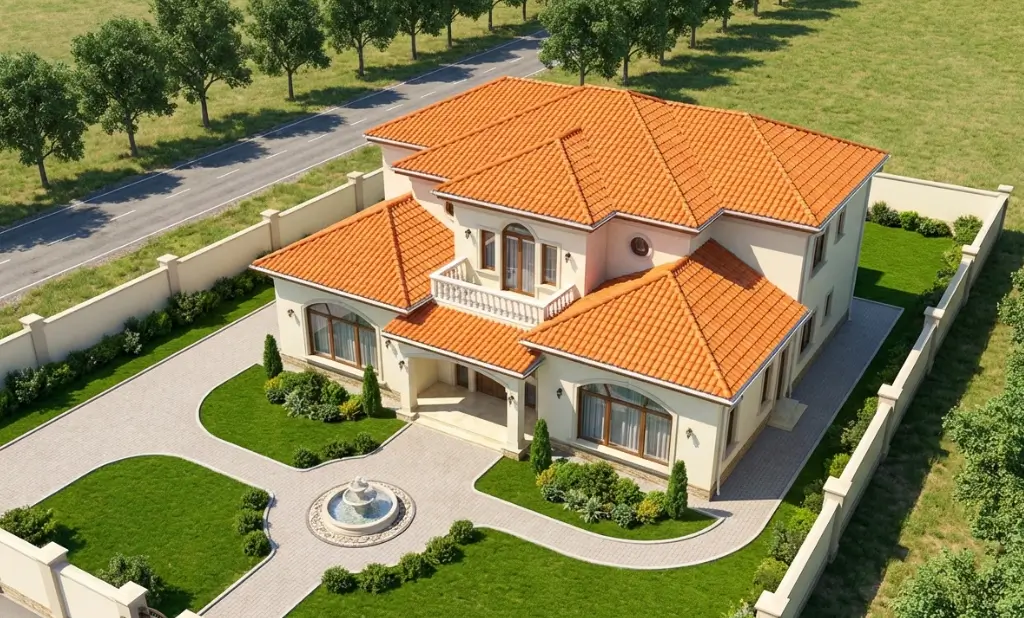
House Printable 3D Model for Creative Projects
The house printable 3D model we’re featuring today opens up a world of architectural creativity for designers, hobbyists, and professionals alike. This high-quality, ready-to-print file serves as the perfect starting point for anyone looking to bring structural designs from digital concept to physical reality. With precise geometry and optimized printability, this model allows you to experiment with architectural visualization while mastering the fundamentals of 3D printing. Whether you’re planning a scale model for a client presentation or creating a detailed prototype for personal projects, this versatile house model delivers exceptional results with minimal preparation.
Table of Contents
Why This House Model is Perfect for 3D Printing Projects
Not all 3D models are created equal, especially when it comes to printability. This particular house printable 3D design stands out for several critical reasons:
- Pre-optimized geometry: The model features proper wall thickness and support structures, eliminating common printing failures.
- Beginner-friendly design: Perfect for newcomers to 3D printing while offering enough detail to satisfy experienced users.
- Manifold mesh: The watertight design ensures no printing errors from gaps or overlapping surfaces.
- Scalable dimensions: Easily adjust the size to fit your specific project requirements without losing detail.
- Test-proven: Rigorously tested on multiple printer types to ensure consistent results across different machines.
For professionals in architecture or design fields, this model serves as an excellent teaching tool or rapid prototyping solution. You can find more information in this comprehensive guide to 3D printing architectural models that explains the technical aspects of architectural printing.
5 Innovative Ways to Use This Model in Your Designs
This versatile house printable 3D file can be incorporated into numerous creative projects:
- Architectural presentations: Create physical scale models to accompany digital renderings for client meetings, giving stakeholders a tangible representation of proposed designs.
- Educational dioramas: Teachers and students can use the printed house as the centerpiece for geography, history, or environmental science projects.
- Tabletop gaming terrain: Customize and paint the house for role-playing games or miniature wargaming scenarios.
- Design portfolio pieces: Showcase your 3D printing skills with a physical example of your technical capabilities, similar to how designers highlight their work in best Canva resume templates to showcase your designs.
- Real estate marketing: Create small-scale models of properties for open houses or promotional materials, offering a unique marketing angle that stands out from traditional photography.
Step-by-Step: Slicing and Printing for Flawless Results
Achieving perfect prints with this house printable 3D model requires attention to certain technical aspects:
- Software preparation:
- Import the STL file into your preferred slicer software (Cura, PrusaSlicer, or Simplify3D).
- Orient the model with the flat side down to minimize support material.
- Set layer height between 0.1mm and 0.2mm for optimal detail preservation.
- Print settings optimization:
- Use 15-20% infill for durability without excessive material waste.
- Enable supports only where necessary (typically under overhangs greater than 45 degrees).
- Set print speed to 40-50mm/s for detailed areas and 60-70mm/s for infill.
- Material selection:
- PLA offers easy printing and good detail for beginners.
- PETG provides better durability for functional prototypes.
- Specialty filaments like wood or marble PLA add visual interest.
For additional insights on optimizing house models specifically for 3D printing, check out this excellent step-by-step tutorial for modeling houses for 3D printing.
Easy Customization Ideas in Your Slicer Software
Make this house printable 3D model uniquely yours with these modification techniques:
- Scaling adjustments: Modify the overall dimensions to fit your specific project needs while maintaining proportions.
- Splitting for larger prints: Use the cutting tool in your slicer to divide the model into sections for printers with smaller build volumes.
- Color transitions: Program filament changes at specific layers to create multi-colored effects without painting.
- Surface textures: Experiment with different layer heights and printing temperatures to achieve various exterior textures.
- Add-on features: Incorporate other models like trees, fences, or vehicles to create complete scene compositions.
These customization options allow you to create unique design assets similar to how you might customize inspiring website design examples made with Canva for digital projects.
Common Issues and Fixes for Perfect Prints
Even with a well-designed house printable 3D model, you might encounter these typical challenges:
| Issue | Cause | Solution |
|---|---|---|
| Warping corners | Uneven cooling or poor bed adhesion | Add brim, increase bed temperature, use adhesion spray |
| Detail loss on small features | Incorrect nozzle size or layer height | Use 0.4mm or smaller nozzle, reduce layer height to 0.12mm |
| Stringing between sections | Inadequate retraction settings | Increase retraction distance and speed in slicer settings |
| Weak structural integrity | Insufficient infill or perimeter count | Increase wall count to 3+ and infill to 20-30% |
| Failed overhangs | Insufficient cooling or support | Enable supports, improve cooling, reduce print speed |
By anticipating these challenges, you’ll save time and material while achieving professional-quality results with your house model prints.
Download Your High-Quality STL File Today
Ready to bring this house printable 3D model into your creative workflow? The complete file package includes:
- Optimized STL file ready for immediate printing
- Recommended slicer profiles for popular software
- Documentation with printing tips specific to this model
- License for personal and commercial projects
Start your architectural 3D printing journey with confidence using this professionally designed house model. The same creative freedom you experience with free AI logo generators for creative projects can be applied to your 3D printing endeavors, allowing you to quickly prototype and iterate on physical designs.
Conclusion: Your Gateway to Architectural 3D Printing
This house printable 3D model represents the perfect balance between accessibility for beginners and utility for professionals. With its optimized design, versatile applications, and easy customization options, it’s an ideal starting point for anyone interested in architectural 3D printing. Download the file today and transform your creative vision from digital concept to physical reality, one layer at a time. Whether for professional presentations, educational purposes, or personal projects, this house model delivers consistent, high-quality results that will elevate your 3D printing portfolio.
More About This Asset
What printer specifications do I need to print this house model?
This house printable 3D model works with most FDM printers with a minimum build volume of 150mm × 150mm × 100mm. For best results, a 0.4mm nozzle is recommended, though smaller nozzles (0.2-0.3mm) will capture finer details if your printer supports them. The model is optimized for PLA but works equally well with PETG, ABS, or specialty filaments when proper temperature adjustments are made.
Can I modify this model for commercial purposes?
Yes, this house model includes a commercial license allowing you to use it in client work, educational settings, or products you sell. The only restriction is redistributing the original or modified model as a standalone downloadable file. We encourage customization to suit your specific project needs, similar to how you might adapt templates from design resources.
How can I achieve the best surface finish for presentation models?
For professional-looking architectural models, post-processing makes all the difference. After printing, sand the surface progressively with 220, 400, then 800 grit sandpaper. Apply a thin layer of filler primer, sand again with fine grit, and finish with spray paint in your desired color. For windows, consider brush-painting with gloss black or applying small pieces of tinted acetate for a realistic glass appearance.
Is this model suitable for resin 3D printers?
While optimized for FDM printing, this house model also performs excellently on resin printers. The package includes a separate pre-supported version specifically for resin printing. Resin prints will capture significantly more detail, making them ideal for highly detailed scale models, though they typically require more post-processing with washing and curing steps.